
What Is Nitrogen Used For?
Nitrogen is a colorless and odorless gas that makes up nearly 80% of the air we breathe. It’s an inert gas, meaning it doesn’t react easily with other substances. In addition to being indispensable in the air we breathe, it’s also a vital ingredient in situations where the prevention of oxidation, combustion, and contamination is necessary. Nitrogen generators from D & D Compressor are critical machines for manufacturers in various industries who create products we use every day.
How Is Nitrogen Generated?
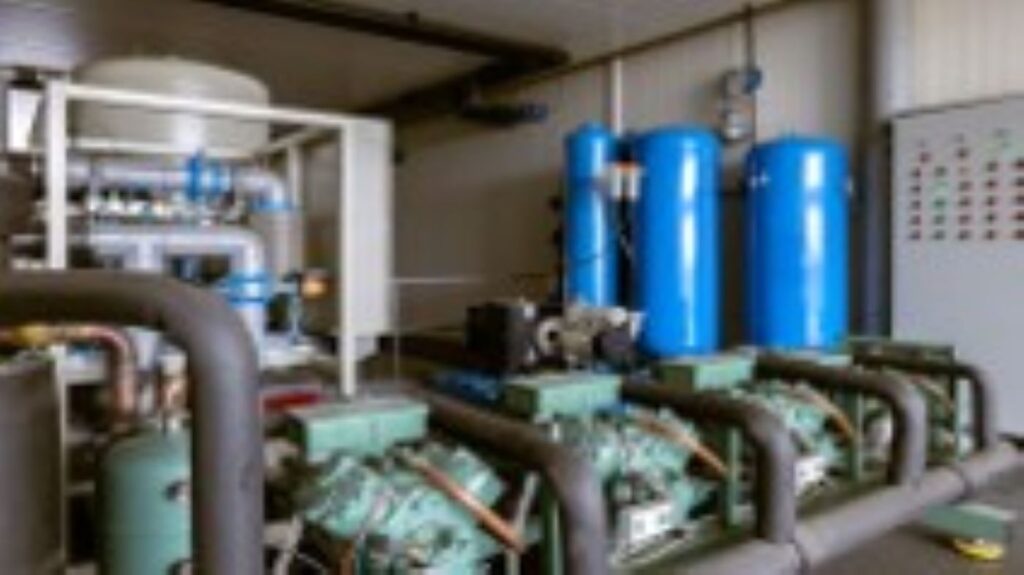
You can’t catch nitrogen in a jar. It must be separated from the other gases in the air. On-site nitrogen generators have been the preferred method since their introduction in the late 20th century. These machines are efficient, cost-effective, and provide a continuous supply of gas. The generator takes standard compressed air and filters it to separate the nitrogen molecules from oxygen, carbon dioxide, and water vapor. There are two primary technologies used to achieve this: PSA (Pressure Swing Adsorption) and Membrane generators.
PSA Nitrogen Generators
PSA is the ideal technology for applications requiring high purity levels (up to 99.999%). The basic idea is that the generator scrubs the oxygen out of the air to provide a stream of pure oxygen:
- Compressed air enters a vessel containing a Carbon Molecular Sieve (CMS)
- Under high pressure, the CMS attracts (adsorbs) oxygen and other trace gases, allowing the nitrogen to pass through
- Once the CMS is saturated with oxygen, the system swings to low pressure, releasing the trapped oxygen and regenerating the sieve for the next cycle.
Membrane Nitrogen Generators
Membrane technology works differently and can be preferred for applications where flow rate is more critical than ultra-high purity, or where portability is required. These generators push compressed air through a bundle of hollow, polymeric fibers. During this process, different gases permeate the membrane walls at different speeds. Oxygen and water vapor are “fast” gases and permeate the fiber walls quickly, venting out of the system. Nitrogen is a “slow” gas, so it travels down the length of the fiber and emerges at the other end as the product gas.
How Nitrogen Is Used in Different Industries
Oxygen causes food to spoil, metal to rust, and fires to burn. Since nitrogen displaces oxygen, nitrogen generators from D & D Compressor, Inc. are the go-to solution for preservation and safety across various industries:
Manufacturing and Metal Refining
In the metal industry, nitrogen is used extensively during laser cutting and welding. It provides a shield that prevents the metal from oxidizing (rusting) when it heats up. It creates a clean cut and ensures a stronger weld. Similarly, in metal refining, nitrogen is bubbled through molten metals to remove impurities, resulting in a stronger final product.
Electronics and Semiconductors
The manufacturing of microchips requires sterile, oxygen-free environments. Even a microscopic amount of oxidation can ruin a circuit board. Nitrogen purges the manufacturing environment, ensuring that soldering and assembly occur in a purely inert atmosphere.
Glass and Ceramics
Producing glass and ceramics requires intense heat. Nitrogen is used in furnaces to control the atmosphere and prevent discoloration. It also contributes to the strength of the final product. It helps create a uniform finish, which is essential for both aesthetic glass and industrial ceramic components.
Pharmaceuticals and Healthcare
In the pharmaceutical industry, nitrogen is used to package medications. By displacing oxygen in packaging, such as blister packs or vials, nitrogen extends the shelf life of drugs and ensures they remain stable. In healthcare settings, medical-grade nitrogen drives pneumatic surgical tools and is used in cryotherapy to freeze and remove abnormal tissue.
The Advantage of On-Site Generation
For decades, businesses have relied on third-party vendors to deliver liquid nitrogen or high-pressure cylinders; however, this approach has often been inefficient in many circumstances. Switching to on-site nitrogen generation offers immediate operational benefits:
- Increased Reliability – When you generate your own nitrogen, you never have to worry about a missed delivery or a supply chain disruption. Your supply is always available, 24/7, as long as you have compressed air and power.
- Cost Savings – On-site generation eliminates recurring costs associated with purchasing gas cylinders, including the price of the gas, cylinder rental, delivery fees, and hazmat charges. Once the equipment is installed, the only ongoing costs are electricity to run the compressor and routine maintenance. Most businesses see a return on investment within 12 to 24 months.
- Improved Safety – High-pressure cylinders are a safety risk. They’re heavy, prone to leaking, and can become dangerous projectiles if damaged. Generating nitrogen on-site at the specific pressure you need is significantly safer for your workforce.
Your Partner in Nitrogen Generation
Selecting the right nitrogen generator depends on your specific flow and purity requirements. This is where expertise matters. D & D Compressor has served various industries for over 30 years with solutions that make your business run smoothly. We carry high-quality models from manufacturers such as NANO Purification Solutions and Pneumatech, all of which provide industrial-grade reliability. We also support our clients with comprehensive maintenance, repairs, and 24/7 emergency service, so your operations never skip a beat.
Do You Need a Steady Supply of Nitrogen?
Nitrogen is an essential gas and a critical utility that keeps production lines moving and products safe. From preventing rust on laser-cut metal to ensuring the purity of life-saving medicines, its applications are endless. If you’re currently relying on delivered nitrogen, you’re likely overpaying and under-optimizing your workflow. Take control of your supply chain by generating your own nitrogen on-site. Contact the experts at D & D Compressor to learn more about PSA and membrane nitrogen generators.