
How to Pick the Perfect Consumer-Grade Air Compressor
At D & D Compressor, we know an air compressor is an essential component of any well-equipped garage or workshop. It simplifies tasks through the use of pneumatic tools, which can deliver more power and durability than their battery-powered or manual counterparts. However, adding one to your arsenal of tools isn’t as easy as simply picking one that falls within your price range. You need a machine that matches your projects without paying for more capacity that you’ll never use. Quality equipment matters just as much to the home DIYer and backyard mechanics as it does to a large industrial facility. Here’s a guide to help narrow your search for a consumer-grade air compressor.
Portable vs. Stationary Compressors
It’s essential to consider how you plan to use your compressor. If you have a dedicated shop where you do all your work, a stationary unit might be fine. But if you’ll be doing home DIY or mechanic-type work, mobility will be critical:
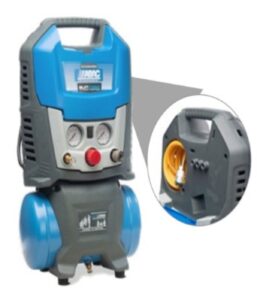
- Portable Compressors – You can easily move these to different areas of your property, such as from the garage to the driveway, or even to a friend’s house or job site. These units are either small enough to be carried or have wheels for easy movement. They’re excellent for inflating tires, powering nail guns for renovation projects, or running light-duty air tools.
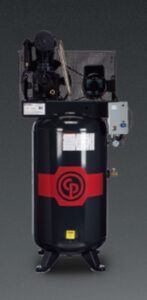
- Stationary Compressors – These are large, heavy, and often bolted to the floor for safety. A primary reason they’re not mobile is that they offer higher capacity and power. If you have a dedicated workshop where you plan to run air-hungry tools, like sanders, grinders, or paint sprayers, for extended periods, consider this option.
Selecting Your Power Source
A reliable air compressor requires an engine or motor to drive the pump, and you have a couple of choices here:
- Electric Air Compressors – These are the most common choice for home workshops. They’re quieter, lighter, and require less maintenance than gas models. Electric compressors can plug into a standard household outlet, but larger stationary models may require a 220-240V circuit. Since they don’t produce any exhaust fumes, it’s a safe choice for indoor use.
- Gas-Powered Air Compressors – If you’ll be working outdoors without access to electricity, such as on a new construction site or in a large field, gas-powered compressors are the way to go. On the upside, they usually offer higher power output than electric but are heavier, louder, and require ventilation due to exhaust.
- Cordless Air Compressors – Battery technology has advanced significantly, enabling lithium-ion batteries used in power tools to power cordless compressors. These are easily portable and perfect for light-duty tasks like topping off tires or finish nailing. Battery life is limited, so these are often a nice supplement for small jobs if you already have a gas or electric compressor.
Air Compressor Specifications
Reading a spec sheet for an air compressor can be confusing, unless you know what you’re looking for and the meaning behind the numbers:
Horsepower (HP)
Horsepower indicates the strength of the motor driving the pump. While a higher HP generally suggests a more powerful machine, it’s not the best indicator of how well the compressor will run your tools. Focus less on HP and more on the airflow ratings.
PSI (Pounds per Square Inch)
PSI measures the amount of pressure the air creates in the tank. Think of this as the “punch” behind the air. Most pneumatic tools require around 90 PSI to function correctly. Most consumer-grade compressors easily reach 135 to 150 PSI, which is sufficient for almost all DIY applications.
SCFM (Standard Cubic Feet per Minute)
This is the most critical number to check. SCFM measures the volume of air the compressor delivers at a specific pressure. If your compressor can’t generate enough air volume to power your tool, it will stop working while the tank recharges.
How Much SCFM Do I Need From My Air Compressor?
To choose the right compressor, check the SCFM requirements of the tools you plan to use. A good rule of thumb is to take the requirement of your most demanding tool and multiply it by 1.5 to provide a safety margin. Your tools may differ, but this is a general guideline of SCFM requirements for common workshop tools at 90 PSI:
- Brad Nailer: 3 – 0.5 SCFM
- Framing Nailer:2 – 2.5 SCFM
- Impact Wrench (1/2″):0 – 5.0 SCFM
- Ratchet (3/8″):5 – 5.5 SCFM
- Orbital Sander:0 – 9.0 SCFM
The Role of Tank Size
The tank is a reservoir for compressed air. The size is measured in gallons, and a larger tank holds more air, allowing you to use your tools longer before the motor kicks on to repressurize the system.
- Small Tanks – Anything from one to six gallons is usually fine for intermittent use, like nail guns.
- Large Tanks – Tools that require continuous use, like grinders, sanders, and spray guns, require more air, so look for anything from twenty gallons or more for steady flow.
Single-Stage vs. Two-Stage Compressors
You’ll also come across units from compressor manufacturers that have one or multiple tanks:
- Single-Stage – The air is compressed once and sent to the storage tank. These are typically adequate for home shops and usually max out around 120 PSI. They’re cost-effective and handle most consumer needs.
- Two-Stage – The air is compressed, cooled, and then compressed a second time. This delivers a higher pressure (often 175 PSI or more) and greater efficiency. Two-stage compressors are almost exclusively stationary units found in professional automotive shops or industrial settings.
Oil-Lubricated vs. Oil-Free Pumps
Finally, pay attention to the pump mechanism when you start narrowing down choices. Oil-free compressors utilize pre-lubricated materials and don’t require much maintenance. These are fine for occasional use. Oil-lubricated compressors have a piston that requires oil changes, similar to a car engine, and the compressor must be kept on a level surface.
There’s an Air Compressor for Everyone
D & D Compressor, Inc. offers a wide selection of reliable compressor types to meet the needs of every hobbyist or professional. This information should help you in your search, and we invite you to browse our selection of air compressors and contact us with any questions. We’re proud to provide high-performance and quality equipment for any task.